Launch offer — valid today only

📄 Digital book in PDF · read it on your phone or print it

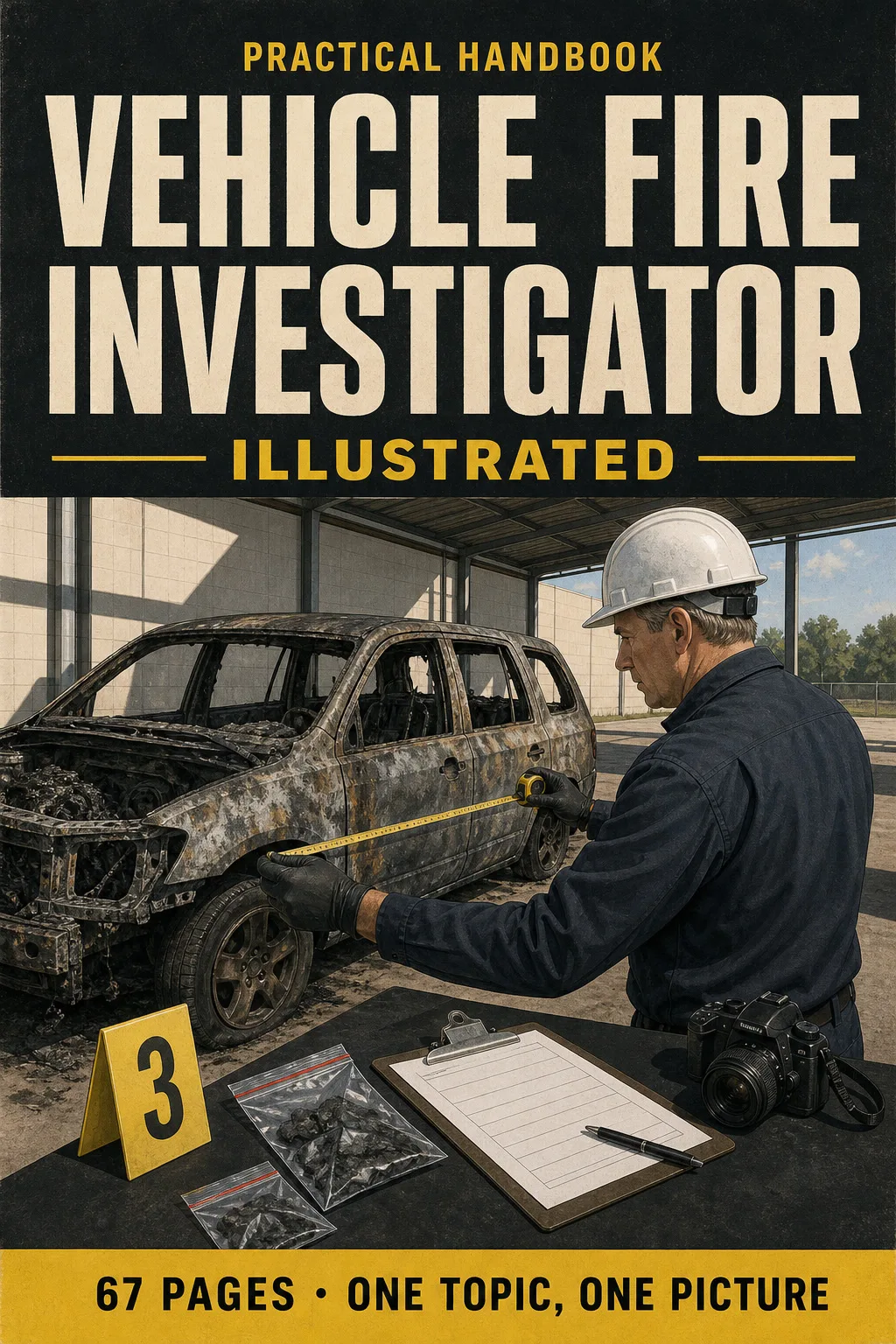
Vehicle Fire Investigation for the CVFI Exam, Explained in Drawings One Fixed Order for Every Vehicle

Scene safety, the VIN and documentation, fuel and 12-volt systems, fire patterns, hybrids and EVs, origin, cause, evidence and the report. Every topic gets its own page: the drawing first, then what you need to remember. 67 illustrated pages.

START STUDYING THIS WAY

🔒 Secure checkout · PDF by email · 30-day guarantee

Every topic, its own pageEach step of the vehicle exam drawn, with the explanation right beside it
67 illustrated pages9 parts, from the scientific method to the final report and exam review
Up-to-date sourcesNFPA 921 (current edition), NFPA 1033 and the published CVFI exam outline
PDF by emailFormat

Look Inside the Book

Every page has one large drawing and a box with the steps, numbers and rules you need to know:

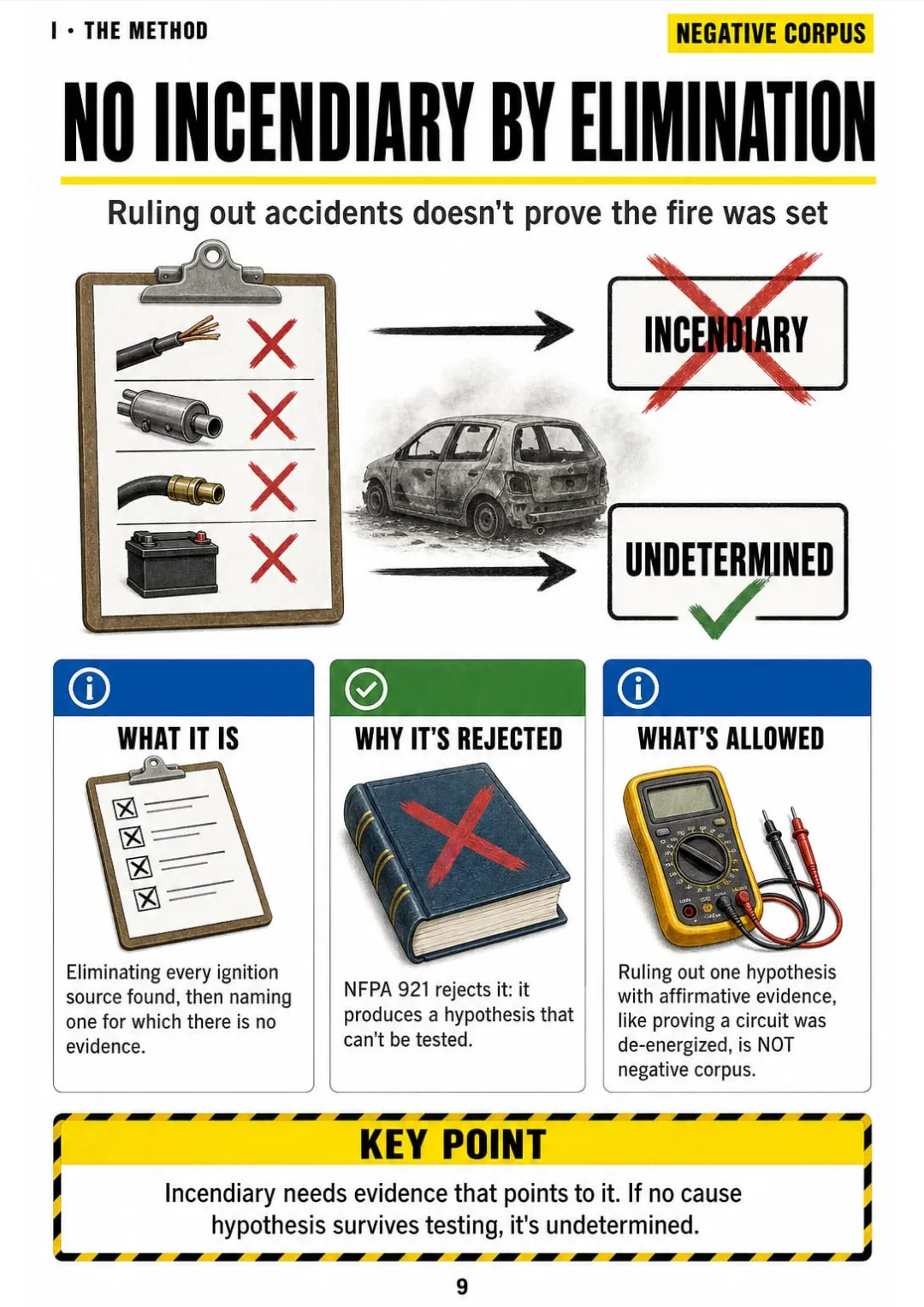
Negative corpus is rejected by NFPA 921: without supporting evidence, the answer is undetermined.
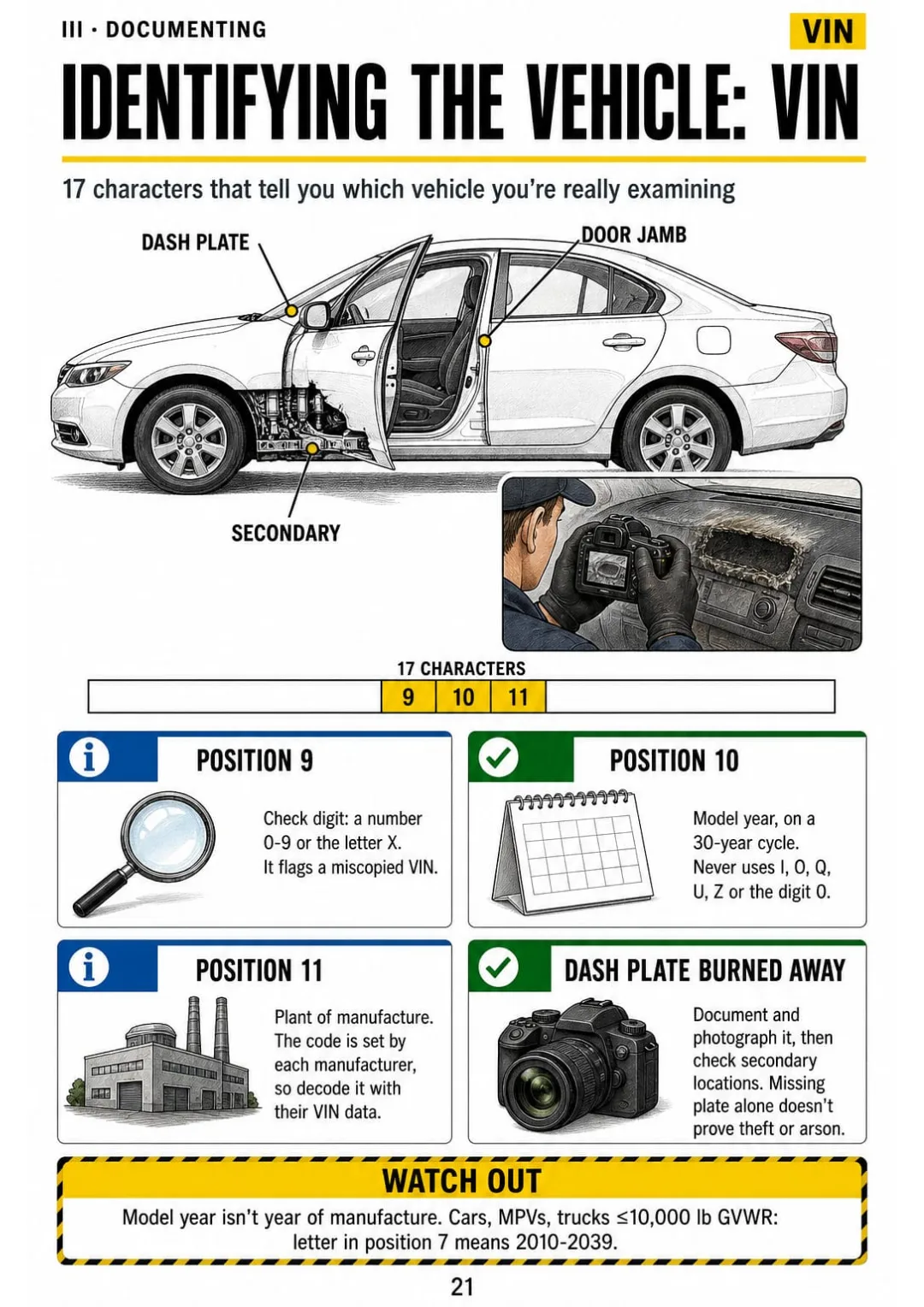
17-character VIN: position 9 is the check digit, 10 the model year, 11 the plant.
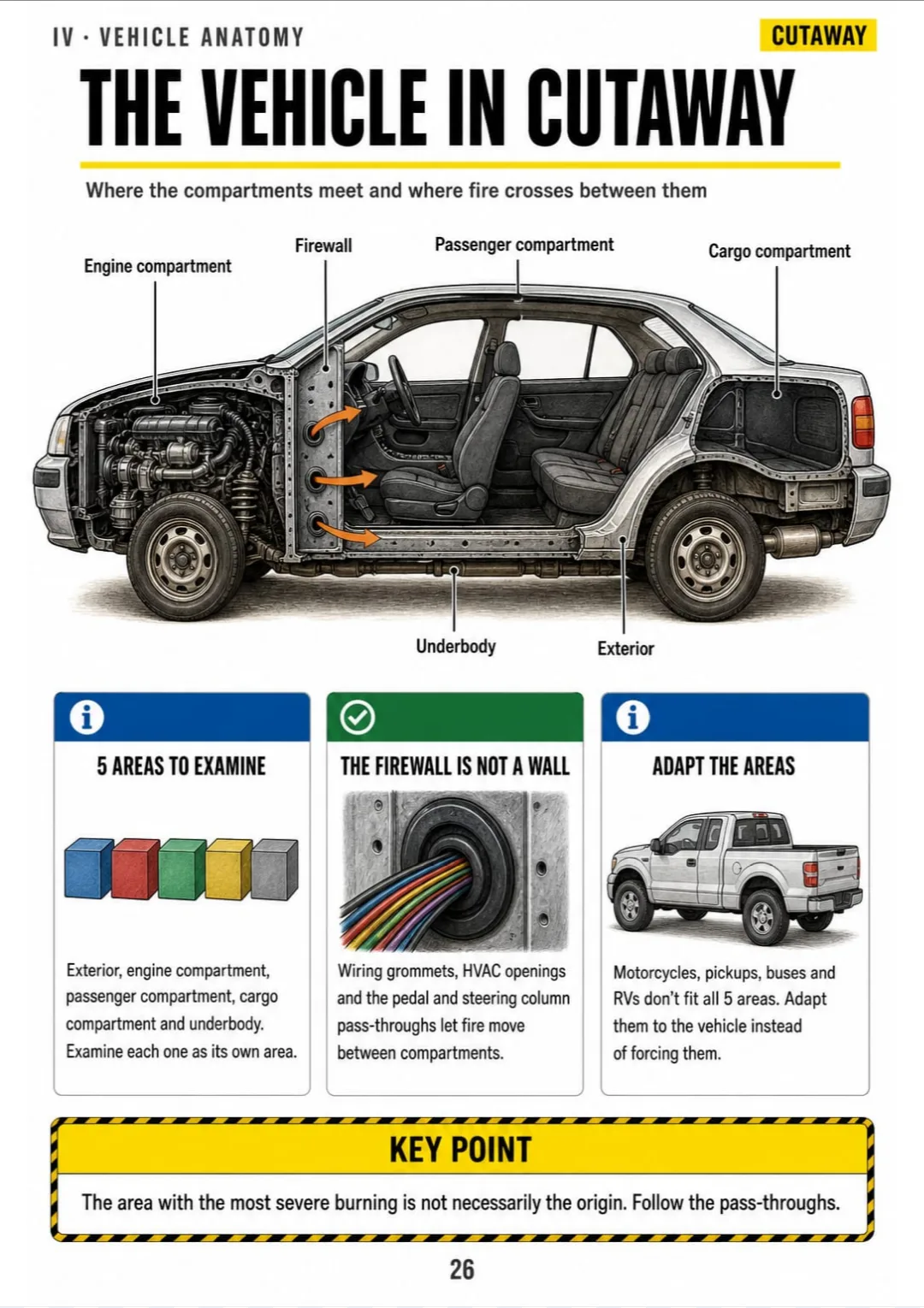
5 areas, one firewall, and the 3 paths fire takes from engine to cabin
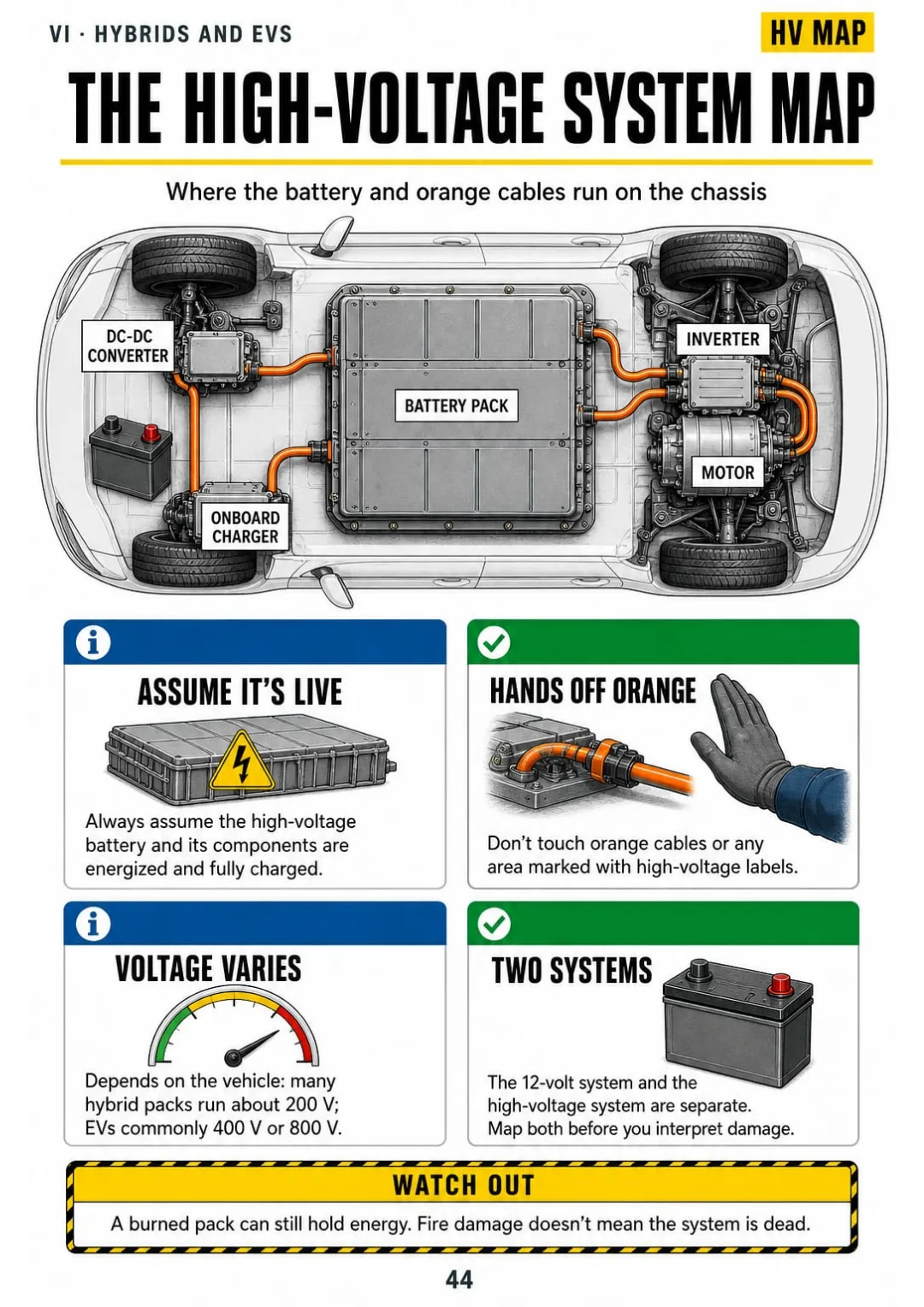
Battery, inverter, motor, DC-DC converter, charger: assume all of it is energized.
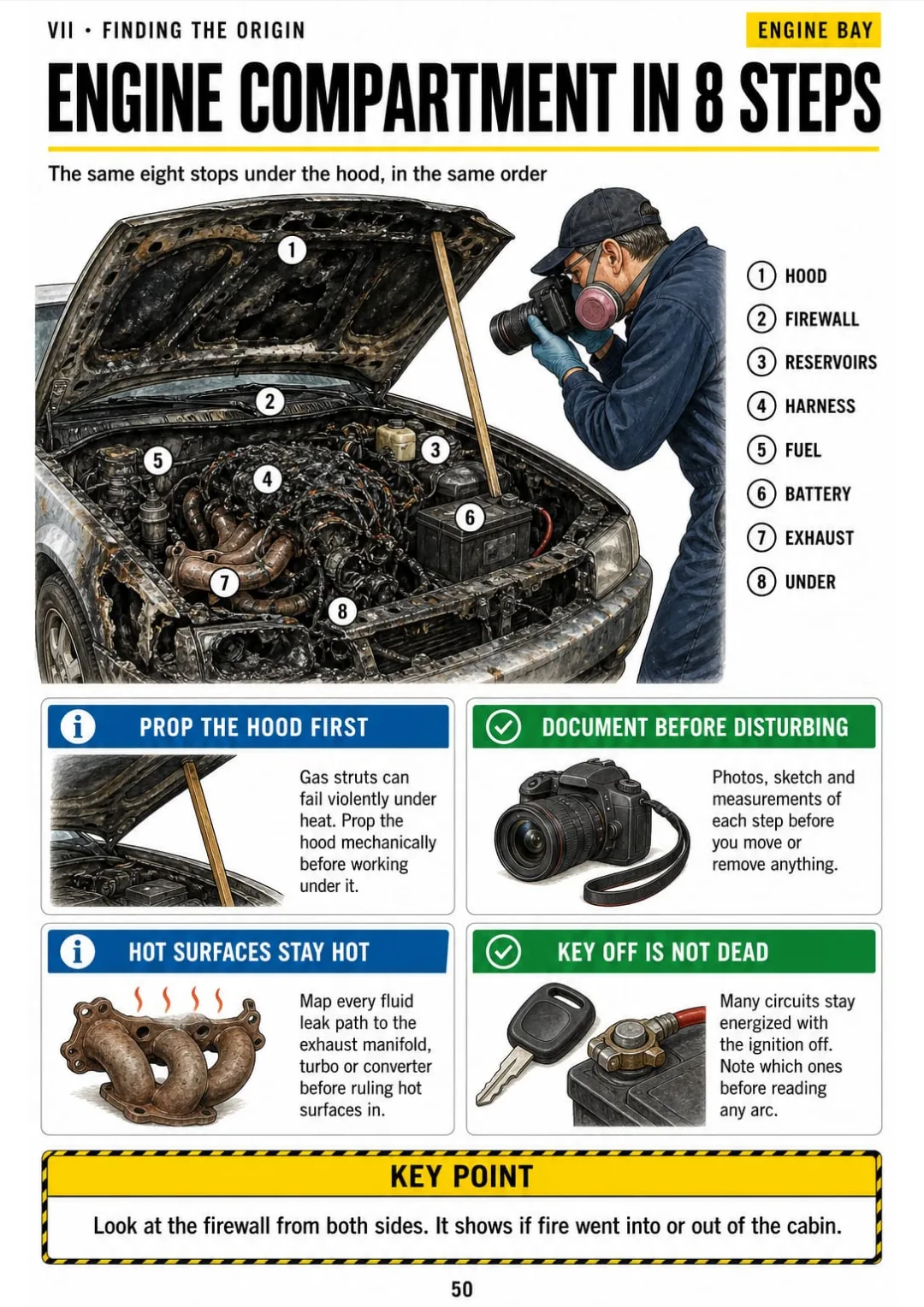
8 engine bay steps: hood, firewall, reservoirs, harness, fuel, battery, exhaust, under
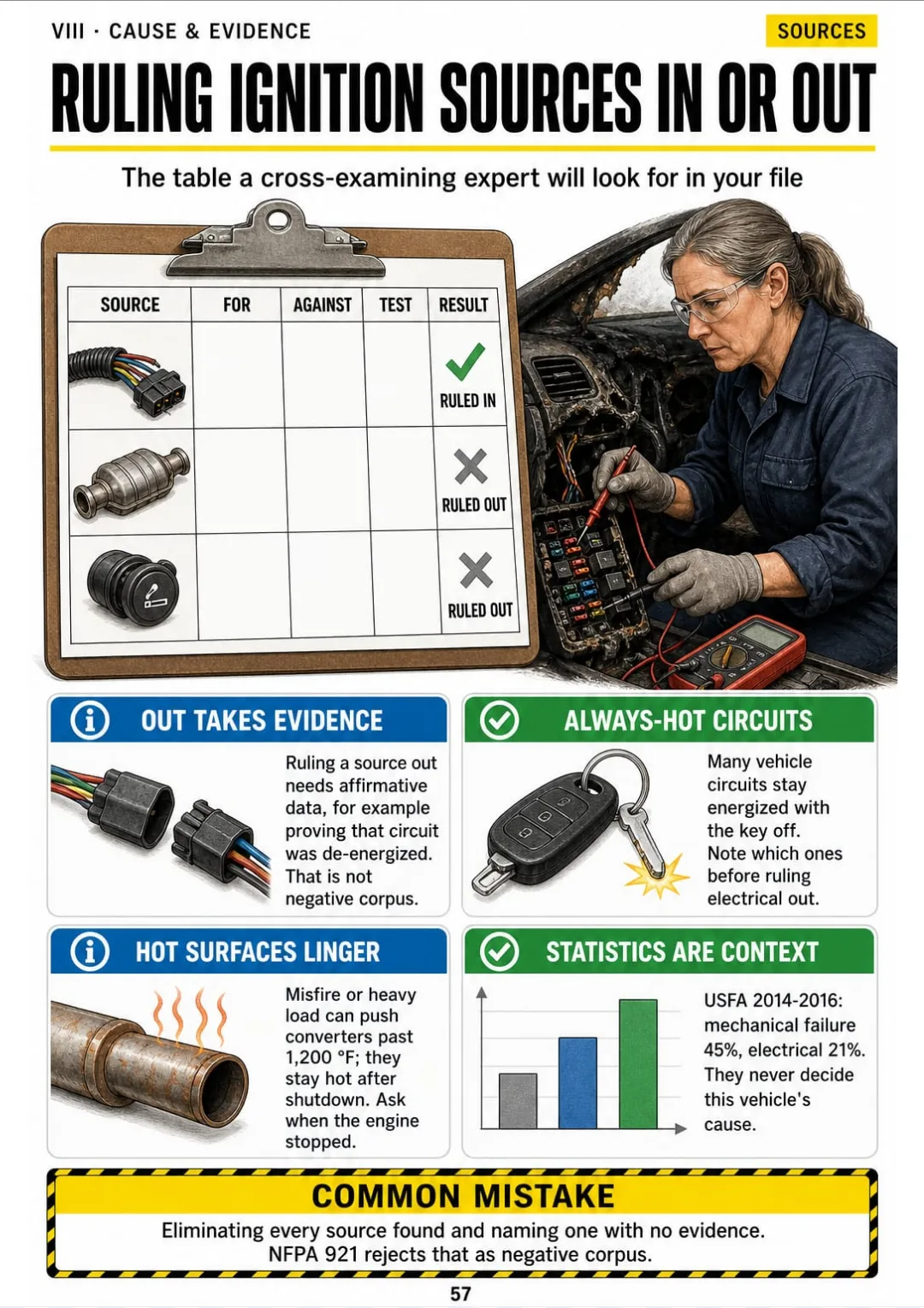
Each ignition source in the origin area: for, against and the test you ran. Out needs evidence too.
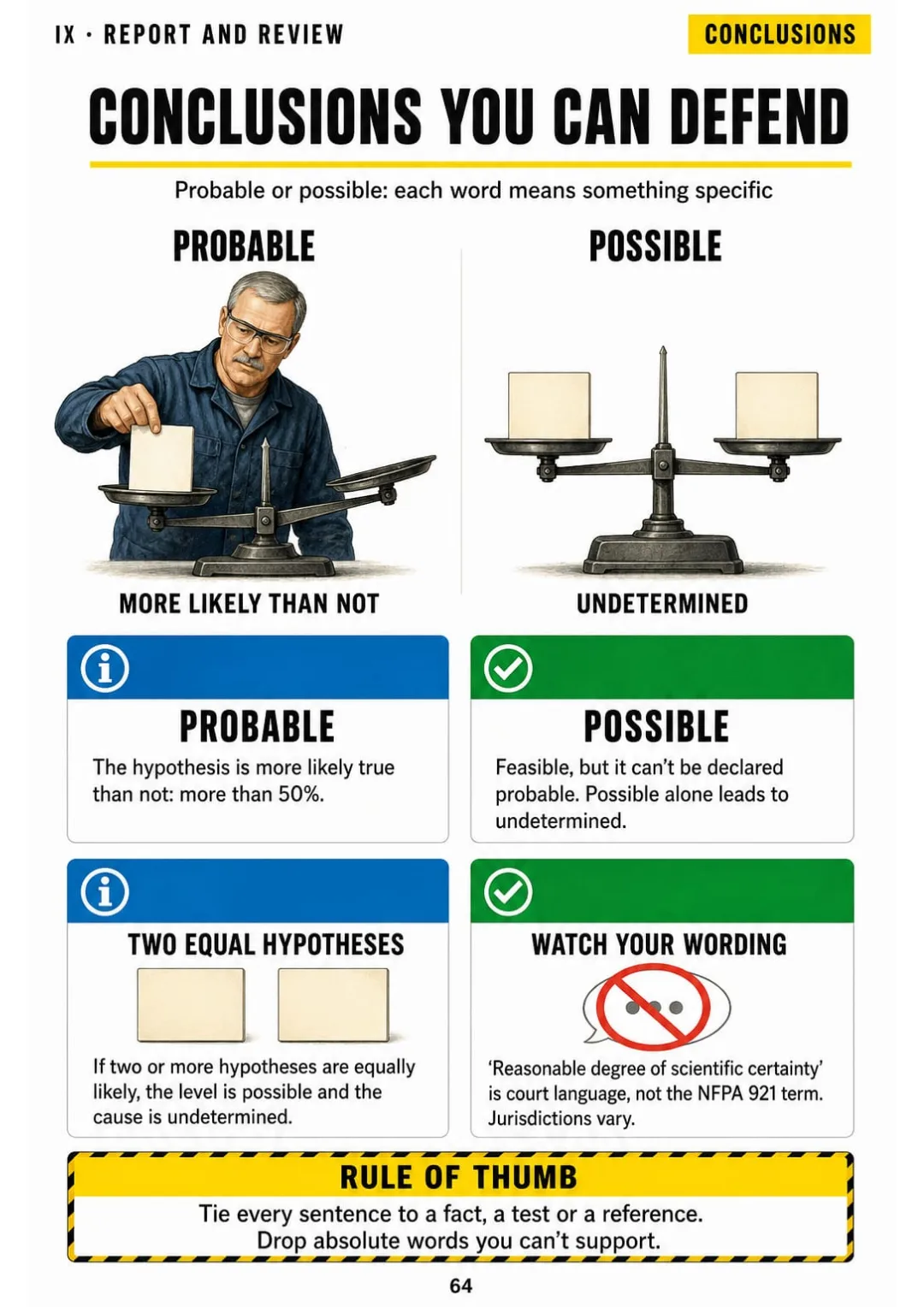
Probable = more likely than not (>50%); possible only or two equal hypotheses = undetermined
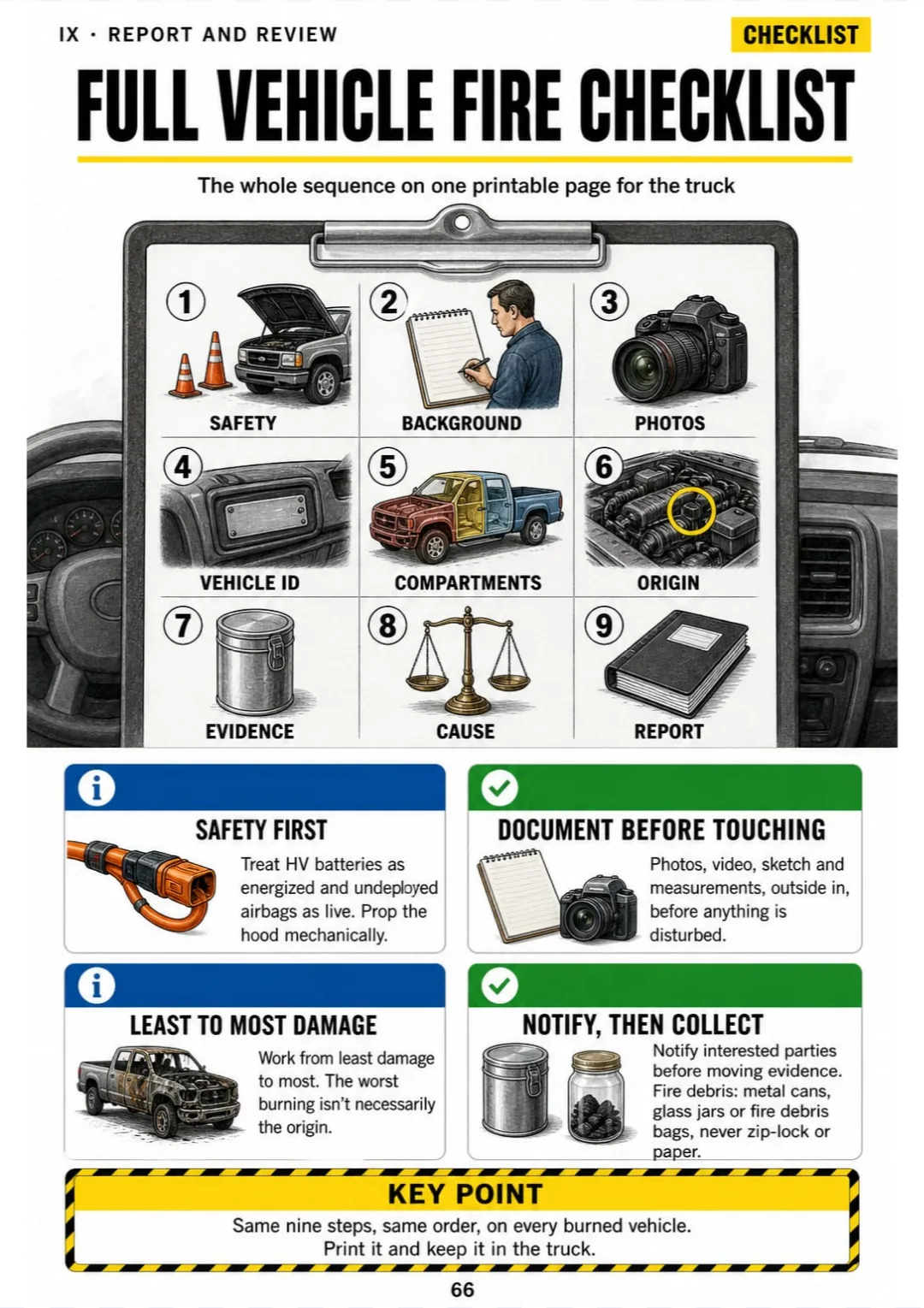
9 steps on one page: safety, background, photos, ID, compartments, origin, evidence, cause, report

Swipe to see more →

These are real pages from the book. The table of contents is the full one: 9 parts and 63 topics.

The Problem Isn't You. It's How It Was Explained to You.

You're standing at a burned sedan with the hood up and the cabin gutted. You need to know how the fire got from the engine bay to the dash, and which way it went.

The guide covers the vehicle's areas and the firewall in paragraphs. Five areas, one barrier and a handful of openings, all described in words, and nothing you can point to when you're at the car.

5 areas, one firewall, and the 3 paths fire takes from engine to cabin

In this book that's one page: the vehicle drawn in cutaway, the five areas labeled, the firewall in the middle and the three paths fire takes from the engine to the cabin marked with arrows.

The rest works the same way: the VIN, the 12-volt system, V-patterns on body panels, the high-voltage map and the engine compartment exam in 8 steps. Each one has its own page.

You look at the page, then at the car, and you know where to start without going back to the guide.

COMPARE FOR YOURSELF

The Same Topic, Two Ways to Study It

THIS
  • The guide: line after line
  • VIN positions explained only in words
  • You walk into the exam with doubts
The vehicle identification number consists of seventeen characters assigned by the manufacturer in accordance with federal requirements and is generally located on the driver's side of the dashboard, visible through the windshield, as well as on labels affixed to the door jamb. The ninth character functions as a check digit calculated from the remaining characters, the tenth denotes the model year and the eleventh identifies the assembly plant, while the remaining positions describe manufacturer, attributes and production sequence, which the investigator should record and compare across locations.
FOR THIS
  • The 17-character VIN in one drawing
  • Positions 9, 10 and 11 in a box
  • You see it and you get it
17-character VIN: position 9 is the check digit, 10 the model year, 11 the plant.
CONTENTS

Take a Look at the 9 Parts and 63 Topics

The method, scene safety, documentation, vehicle anatomy, fire patterns, hybrids and EVs, origin, cause and evidence, and the report with exam review: 67 pages, all illustrated

IThe Method Before the Vehicle · pp. 5-12
  1. Why Vehicle Fires Need Their Own Method
  2. The Scientific Method as a Flowchart
  3. Testing a Hypothesis: What Counts as a Test
  4. Expectation Bias and Confirmation Bias
  5. Negative Corpus: Why You Can't Call It Incendiary by Elimination
  6. The Four Cause Classifications
  7. Origin, Cause, Responsibility: Three Different Questions
  8. The Same Order for Every Vehicle
IIScene Safety and First Look · pp. 13-19
  1. Approaching a Burned Vehicle Safely
  2. Pressurized Components That Can Fail
  3. Undeployed Airbags and Pretensioners
  4. Scene Security and Who Was There Before You
  5. Background Information to Collect
  6. Witness Statements: What They Saw and When
  7. Scene Inspection vs. Tow Yard Inspection
IIIDocumenting the Vehicle · pp. 20-25
  1. Photography Sequence: Outside In
  2. Identifying the Vehicle: VIN and Labels
  3. Diagramming the Scene in Feet and Inches
  4. Recording Damage Compartment by Compartment
  5. Exemplar Vehicles
  6. Recalls, Service Bulletins and Repair History
IVVehicle Anatomy for Fire Investigators · pp. 26-34
  1. The Vehicle in Cutaway
  2. Gasoline Fuel System
  3. Diesel Fuel System
  4. Other Combustible Fluids
  5. The 12-Volt Electrical System
  6. Ignition Sources: Hot Surfaces
  7. Ignition Sources: Electrical, Mechanical and Open Flame
  8. Interior Materials and Fuel Load
  9. Metals and Their Melting Points
VFire Patterns on the Vehicle · pp. 35-42
  1. How Fire Spreads Inside a Vehicle
  2. Ventilation Changes Everything
  3. V-Patterns and Plumes on Body Panels
  4. Paint, Sheet Metal and Discoloration
  5. Clean Burn and Protected Areas
  6. Glass: Tempered Side Windows vs. Laminated Windshield
  7. Tires, Wheels and Ground Patterns
  8. Seat Springs and Interior Remnants
VIHybrids and Electric Vehicles · pp. 43-48
  1. How to Tell It's a Hybrid or EV
  2. High-Voltage System Map
  3. Lithium-Ion Thermal Runaway
  4. Reignition Hours or Days Later
  5. High-Voltage Disconnects and Emergency Response Guides
  6. Examining a Battery Pack Fire
VIIFinding the Origin · pp. 49-55
  1. Least Damage to Most Damage
  2. Engine Compartment Exam in Numbered Steps
  3. Passenger Compartment Exam in Numbered Steps
  4. Cargo Area and Undercarriage Exam
  5. Heat and Flame Vector Analysis
  6. Arc Mapping in a Vehicle
  7. Worked Example: Narrowing the Origin Step by Step
VIIICause, Evidence and Incendiary Indicators · pp. 56-62
  1. Building the Cause: Fuel, Ignition, Oxidizer, Sequence
  2. Ruling Ignition Sources In or Out
  3. Incendiary Indicators in Vehicles
  4. Theft and Vehicle Condition Clues
  5. Ignitable Liquid Samples
  6. Spoliation and Notifying Interested Parties
  7. Collecting, Packaging and Chain of Custody
IXReport, Testimony and Exam Review · pp. 63-67
  1. The Report Outline
  2. Writing Conclusions You Can Defend
  3. Deposition and Testimony: Where Reports Get Taken Apart
  4. Full Vehicle Fire Checklist
  5. Exam Review: What Gets Asked Most

One Page, One Topic, All Clear

Think of it this way:

You're at the tow yard with a burned crossover, and before you touch anything you have to decide which compartment to examine first and in what order.

You open the book to the engine compartment page and the 8 steps are drawn in sequence: hood, firewall, reservoirs, harness, fuel, battery, exhaust and underneath, each one numbered on the car.

8 engine bay steps: hood, firewall, reservoirs, harness, fuel, battery, exhaust, under

The same goes for the passenger compartment, arc mapping, side windows and windshield, the high-voltage system and ignitable liquid samples: each one on its own page.

Vehicle Fire Investigator Illustrated is 67 illustrated pages in 9 parts, one topic per page, ending with a one-page vehicle fire checklist and an exam review.

What you see drawn, you don't have to memorize.

What's Inside Vehicle Fire Investigator Illustrated:

Ipp. 5-12

The Method Before the Vehicle

One method you can repeat on every car: why vehicles need their own approach, the scientific method as a flowchart, testing a hypothesis, bias, negative corpus and the four cause classifications.

IIpp. 13-19

Scene Safety and First Look

Approaching the vehicle safely, pressurized parts, undeployed airbags, scene security, background information, witnesses, and scene vs. tow yard.

IIIpp. 20-25

Documenting the Vehicle

Photo sequence from the outside in, VIN and labels, the scene diagram in feet and inches, damage by compartment, exemplars, recalls and repair history.

IVpp. 26-34

Vehicle Anatomy for Fire Investigators

The vehicle in cutaway, gasoline and diesel fuel systems, other fluids, the 12-volt system, ignition sources, interior fuel load and metal melting points.

Vpp. 35-42

Fire Patterns on the Vehicle

How fire spreads inside a vehicle, ventilation, V-patterns, paint and sheet metal, clean burn, glass, tires and ground patterns, seat springs.

VIpp. 43-48

Hybrids and Electric Vehicles

Spotting a hybrid or EV, the high-voltage map, thermal runaway, reignition, disconnects and emergency response guides, battery pack fires.

VIIpp. 49-55

Finding the Origin

Examine any car in the same order: least to most damage, the engine and passenger compartment exams in numbered steps, cargo and undercarriage, heat vectors, arc mapping and a worked example.

VIIIpp. 56-62

Cause, Evidence and Incendiary Indicators

Fuel, ignition, oxidizer and sequence, ruling sources in or out, incendiary indicators, theft clues, liquid samples, spoliation and chain of custody.

IXpp. 63-67

Report, Testimony and Exam Review

The report outline, conclusions you can defend, deposition and testimony, the full vehicle checklist and an exam review.

At the end of the book: A full vehicle fire checklist on one page and an exam review organized topic by topic, in the same order as the book.
Plus: 2 Free Books

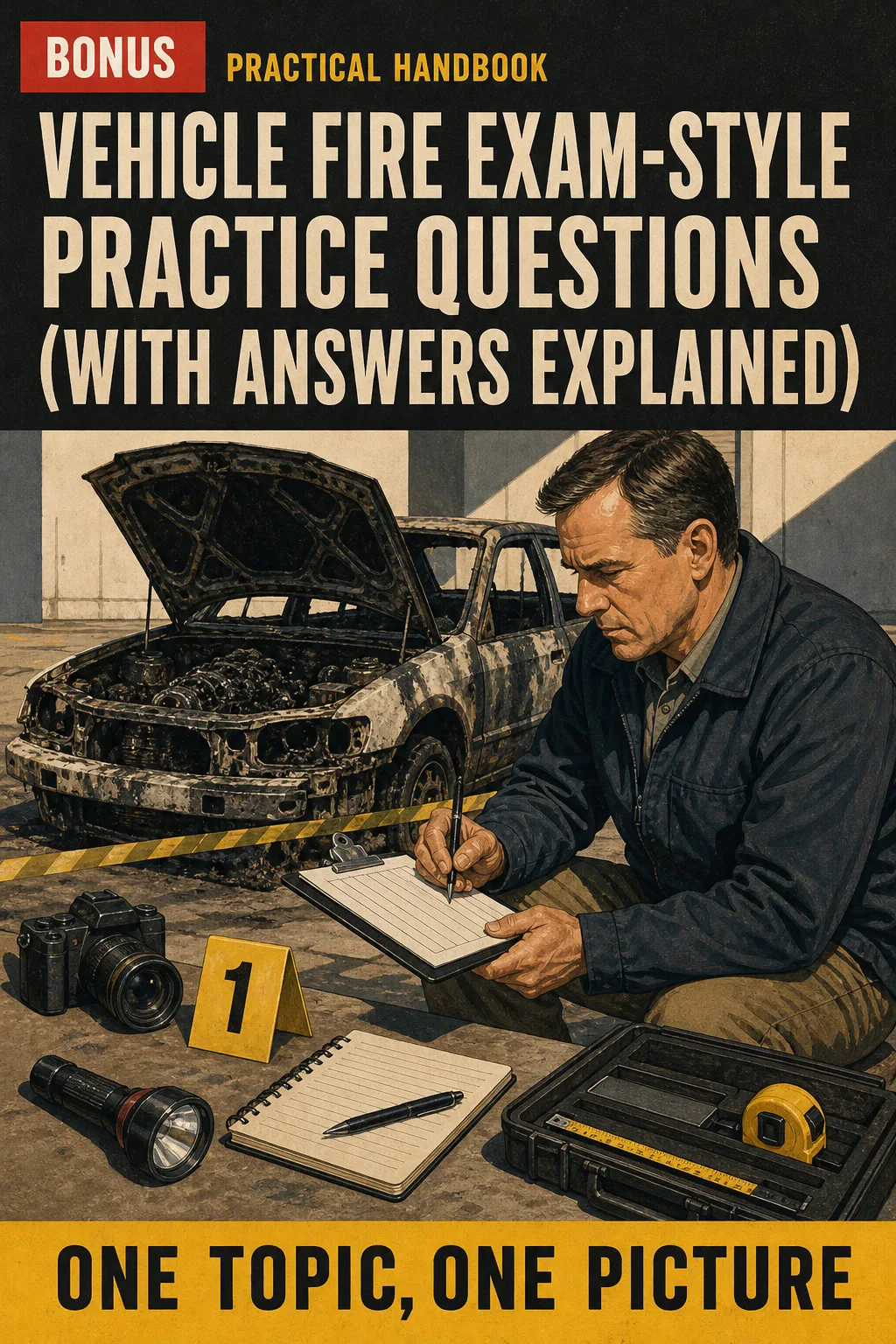
Vehicle Fire Exam-Style Practice Questions (with answers explained)

BONUS 1: «Vehicle Fire Exam-Style Practice Questions (with answers explained)»

Value on its own: US$ 17.90

Test yourself topic by topic in the multiple-choice format and see exactly why each answer is right, so the exam questions feel familiar.

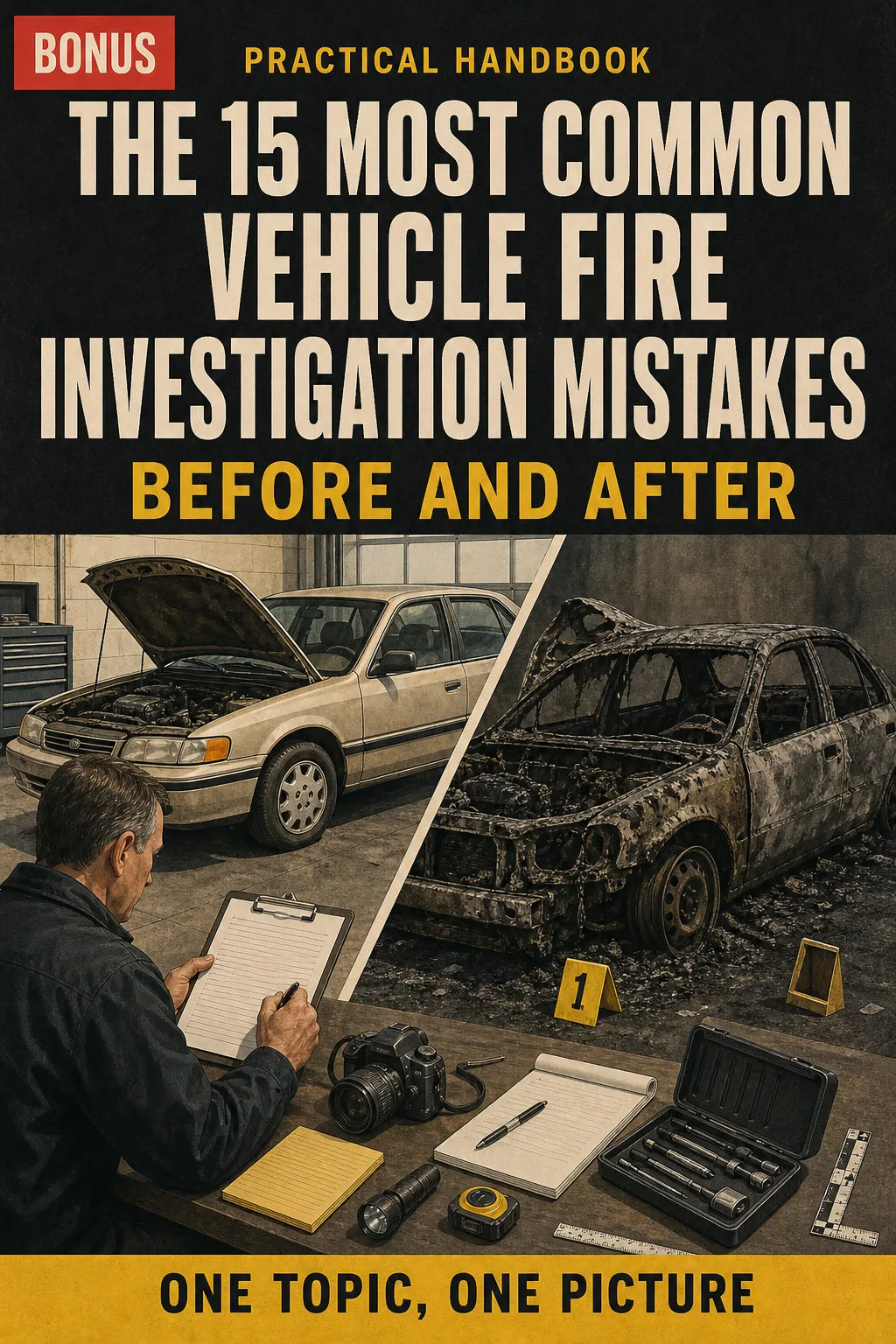
The 15 Most Common Vehicle Fire Investigation Mistakes: Before and After

BONUS 2: «The 15 Most Common Vehicle Fire Investigation Mistakes: Before and After»

Value on its own: US$ 14.90

Spot the frequent errors in scene work, pattern reading and reports side by side with the correct approach, so your findings hold up when someone questions them.

Vehicle Fire Investigator Illustrated with 2 Free Books

  • Vehicle Fire Investigator Illustrated: 67 illustrated pagesUS$ 63
  • BONUS 1: Vehicle Fire Exam-Style Practice Questions (with answers explained)US$ 17.90
  • BONUS 2: The 15 Most Common Vehicle Fire Investigation Mistakes: Before and AfterUS$ 14.90
  • High-resolution PDF to printIncluded
Total value US$ 95.80
YOUR PRICE:
US$ 27
You save US$ 68.80
YES, I WANT VEHICLE FIRE INVESTIGATOR ILLUSTRATED FOR US$ 27

📄 This is a digital PDF book sent to your email: nothing is printed or shipped.

Secure purchaseEncrypted payment30-day guarantee

PDF by email: We email you Vehicle Fire Investigator Illustrated as a PDF, together with the two free books. It's a single payment: no installments, no extra charges.

Who This Book Is For

You're studying for the CVFI

You're studying for the CVFI

The vehicle material laid out as a sequence: each topic on one page, so you study it in the same order you'll work it.

Your exam date is close

Your exam date is close

The 9-step checklist and the exam review let you go over the whole book quickly, and the practice questions show you where you still hesitate.

You already work vehicle fires

You already work vehicle fires

For firefighters, fire marshal staff and SIU investigators: a printed reference for the truck, so you work every car the same way and write conclusions you can explain.

Everything You Get Today

US$ 95.80US$ 27
YES, I WANT VEHICLE FIRE INVESTIGATOR ILLUSTRATED FOR US$ 27

📄 This is a digital PDF book sent to your email: nothing is printed or shipped.

30DAYS
GUARANTEE

30-Day Guarantee

Try Vehicle Fire Investigator Illustrated for 30 days, bonus books included.

We refund everything if the file won't open, if the book isn't what you see here, if you were charged twice or if the email doesn't arrive. Just email us.

You pay once. No subscriptions.

Frequently Asked Questions

Is this for me if I already investigate structure fires?

Yes. It isn't a beginner book: it starts from the method you already use and goes straight to what's different in vehicles, including a full part on hybrids and EVs.

Where does the content come from?

It's cross-checked against the current edition of NFPA 921 (mainly its motor vehicle fires chapter) and NFPA 1033, following the topics the CVFI exam covers. Before you take the exam, check with the certifying body which edition of NFPA 921 your exam uses. Everything is explained in our own words and drawings, with no text or tables reproduced.

Is this official material?

No. It's an independent study guide. It isn't affiliated with, endorsed by or approved by NFPA or NAFI, and it doesn't grant a certificate, CE hours or any credential: it's what you study and review with.

Does it replace a course or formal training?

No. It's a study and review aid. It doesn't replace certification training, your department's procedures or manufacturers' emergency response guides.

Are the practice questions the ones on the exam?

No. They're written for this book, in a multiple-choice format, so you can test yourself topic by topic. They aren't official exam questions.

When and how do I get it?

The book and the 2 bonus books arrive as PDFs by email, at the address you enter at checkout.

Do I have to pay every month?

No. It's a one-time payment.

Can I have it on paper?

Yes. The PDF is ready to print, so you can keep a copy in the truck.

How does the refund work?

You have 30 days. We refund everything if the file won't open, if the book isn't what you see on this page, if you were charged twice or if the email doesn't arrive: just email us.

Before You Close This Page

No more rereading the vehicle chapter with nothing sticking.

The cutaway, the VIN and the 8 engine bay steps: you see them drawn, and you've got it.

You walk into the exam and the next scene knowing where everything is.

Drawings make studying faster.

The book is right below.

One-time payment: US$ 27 · Guarantee: 30 days · PDF by email

YES, I WANT VEHICLE FIRE INVESTIGATOR ILLUSTRATED FOR US$ 27

📄 This is a digital PDF book sent to your email: nothing is printed or shipped.